
Quartz vs. Quartzite: Which Is Better For Your Kitchen Countertop Replacement?
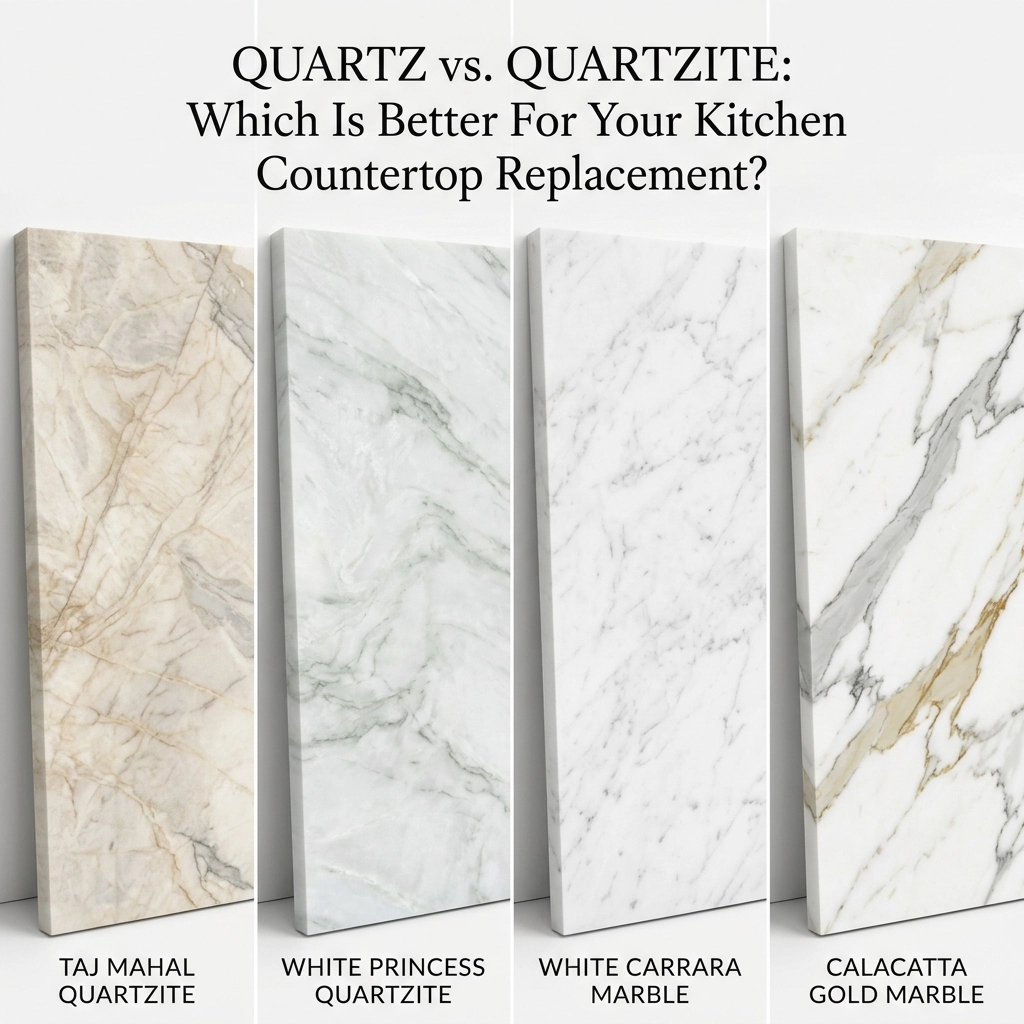
If you are standing in the middle of your kitchen in Warren or Bridgewater, looking at your outdated countertops and wondering how to start your renovation journey, you are likely facing the ultimate industry debate: Quartz vs. Quartzite.
At Surfaces NJ, we hear this question every single day. Because the names are so similar, many homeowners naturally assume they are the same material or at least close cousins. However, the truth is that they couldn't be more different in how they are made, how they perform under pressure, and how they should be maintained.
Whether you are looking for the raw, untamed beauty of natural stone or the sleek, predictable perfection of engineered surfaces, understanding these differences is the key to a successful kitchen transformation. Let’s break down the "Quartz vs. Quartzite" dilemma so you can choose the perfect surface for your Summit home with total confidence.
The fundamental Difference: Nature vs. Engineering
Before we dive into the aesthetics and durability, we need to clarify what these materials actually are.
What is Quartzite?
Quartzite is a 100% natural stone. It began its life as sandstone and, through millions of years of intense heat and pressure beneath the earth’s crust, it transformed into a hard, metamorphic rock. When you choose quartzite, you are choosing a piece of the earth. It is quarried in massive blocks, sliced into slabs, and polished. No two pieces of quartzite are ever identical, offering a level of exclusivity that is hard to match.
What is Quartz?
Quartz, on the other hand, is an engineered product. While it contains roughly 90-95% crushed natural quartz crystals, those crystals are bound together with high-quality resins and pigments. This manufacturing process: often utilizing superior "Made in Italy" technology: allows for incredible consistency and a non-porous finish.

Aesthetics: Finding Your Signature Style
The visual appeal of your countertop is often the primary driver of your decision. Your kitchen is the heart of your home; it should reflect your personal taste while complementing your cabinetry and flooring.
The Organic Beauty of Quartzite
If you gravitate toward the classic, sophisticated look of marble but want something significantly more durable, quartzite is your answer. It typically features soft whites and grays with dramatic, flowing veining that looks like an abstract painting. Because it is a natural product, you might find surprising flecks of blue, green, or gold depending on the mineral content of the specific quarry. For homeowners in Summit who want a one-of-a-kind "showstopper" island, quartzite is often the preferred choice.
The Versatile Perfection of Quartz
Because quartz is engineered, the design possibilities are virtually limitless. Imagine a countertop that looks exactly like Calacatta marble but requires zero maintenance, or a solid, matte black surface that provides a minimalist, industrial vibe. Quartz offers total predictability. If you see a sample you love in our gallery, you can rest assured that the slab installed in your kitchen will look exactly like it. This consistency is perfect for modern designs in towns like Warren where clean lines and uniform patterns are often the goal.

Durability and Heat Resistance: The Daily Grind
New Jersey kitchens are high-traffic zones. Between meal prep, homework, and entertaining, your countertops need to stand up to significant wear and tear.
Hardness and Scratching
Both materials are incredibly hard. On the Mohs scale of mineral hardness, quartzite typically ranks at a 7 or 8 (diamond is a 10), while quartz sits right around a 7. This means both are exceptionally resistant to scratches from knives or heavy cookware. However, because quartzite is a natural stone, it can be more brittle than quartz. Quartz, thanks to the resin binders, has a bit more "flex," making it slightly less prone to chipping on the edges.
The Heat Debate
This is the area where quartzite clearly takes the lead. Because it was formed in the intense heat of the earth, quartzite is naturally heat-resistant. You can generally place a hot pot directly on the surface without fear of damage (though we always recommend using a trivet to be safe).
Quartz is a different story. The resins used to bind the quartz crystals together are essentially a form of plastic. If you place a piping hot pan straight from the oven onto a quartz countertop, you risk "scorching" or discoloring the resin. If your cooking style involves a lot of high-heat activity and you don't want to worry about trivets, quartzite might be the better fit for your lifestyle.
Maintenance: The Secret to Long-Term Value
How much time do you want to spend caring for your countertops? This is the question that usually settles the debate for our clients in Bridgewater.
Quartz: The "Set It and Forget It" Choice
Quartz is completely non-porous. This means it never needs to be sealed. It is naturally resistant to bacteria and stains. Spilled red wine? A splash of coffee? Just wipe it up with mild soap and water. It is the ultimate low-maintenance surface for busy families who want luxury without the homework. You can explore our quartz selection here.
Quartzite: The Ritual of Care
Quartzite is a porous natural stone, much like granite or marble. To keep it from staining, it must be sealed upon installation and then re-sealed periodically (usually once a year). While the sealing process is simple and can be done by most homeowners, it is an extra step in your home maintenance routine. If you neglect the sealer, acidic liquids like lemon juice or vinegar can "etch" or dull the surface over time.

Investment and Resale Value in New Jersey
When you are investing in a kitchen remodel, you aren't just changing the look of a room; you are making a strategic financial decision.
In the New Jersey real estate market: specifically in high-value areas like Warren and Summit: high-end countertops are a major selling point. Both quartz and quartzite are considered premium upgrades that can significantly impact your home's resale value.
- Quartzite often commands a higher price tag due to the cost of quarrying and the complexity of fabrication. It is seen as a "luxury" natural material.
- Quartz offers a wide range of price points but remains a highly desirable, "move-in ready" feature for modern buyers who prioritize low maintenance.
Making the Choice: A Summary
To help you decide, ask yourself these three questions:
- Do I want a unique masterpiece or a consistent design? If you want a one-of-a-kind slab, go with quartzite. If you want a specific, predictable look, choose quartz.
- How do I handle heat? If you want to put hot pans directly on the counter, quartzite is the winner.
- How much maintenance am I willing to do? If you want zero maintenance, quartz is the clear choice.

Why Expert Installation Matters
Regardless of which material you choose, the quality of the installation is what truly defines the finished look. At Surfaces NJ, we specialize in precision fabrication. Whether it’s a complex waterfall island or a full-height matching backsplash, our team ensures that seams are nearly invisible and the natural veining of your stone is showcased to its fullest potential.
We understand the unique architectural styles of homes in the Warren, Bridgewater, and Summit areas. We don't just deliver a slab; we provide a consultative experience to ensure your new countertops integrate perfectly with your lifestyle and your home’s aesthetic.
Elevate Your Kitchen with Surfaces NJ
The choice between quartz and quartzite is personal, but you don't have to make it alone. If you are ready to see these materials in person and feel the difference for yourself, we invite you to visit us. Imagine your kitchen redefined with the timeless elegance of natural quartzite or the sleek, modern resilience of quartz.
Ready to start your transformation? Request an estimate today, or contact us to speak with one of our stone experts. Let’s build something beautiful together.
Tags: